

09.02.2026
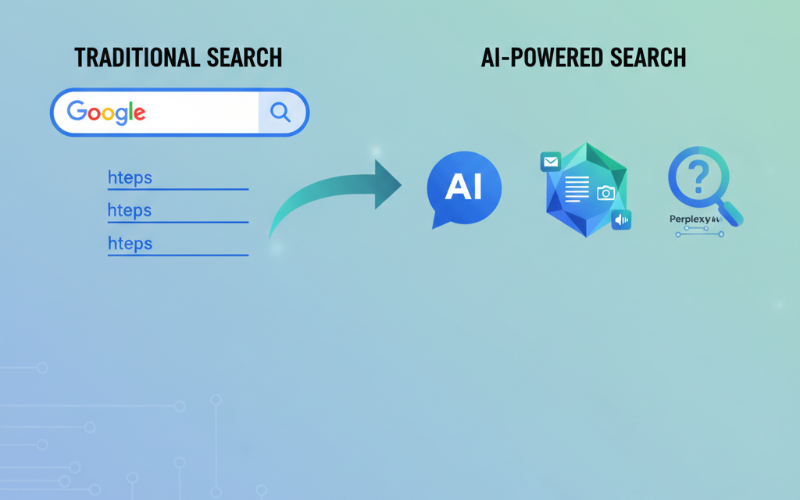
Over 70% of consumers now use AI-powered search tools for information gathering. This shift is transforming how people discover content online. Traditional SEO still matters, but ranking in AI search engines like ChatGPT, Google Gemini, and Perplexity requires a new optimization mindset.
Unlike classic search engines, AI platforms generate direct answers by synthesizing information from multiple sources. To stay visible, your content must be authoritative, structured, and genuinely helpful.
How AI Search Engines Work
AI search engines focus on answer generation, not link listings. They analyze user intent using advanced natural language processing (NLP) and surface the most relevant, trustworthy information.
This means ranking is less about keyword density and more about clarity, accuracy, and contextual depth.
ChatGPT vs Gemini vs Perplexity
ChatGPT excels at conversational explanations and long-form answers.
Google Gemini processes multimodal data such as text, images, and video.
Perplexity focuses on answer accuracy and explicit source citations, making credibility critical.
Core SEO Strategies for AI Search Engines
1. Publish High-Authority Content
AI models prioritize content that demonstrates E-E-A-T (Experience, Expertise, Authoritativeness, Trustworthiness).
- Use verified facts and accurate data
- Cite credible sources
- Build backlinks from trusted websites
- Maintain topical consistency
2. Write in Natural, Human Language
AI understands conversational tone better than keyword-stuffed text.
- Use simple, direct language
- Short paragraphs and sentences
- Clear headings and bullet points
3. Use Structured Data (Schema Markup)
Structured data helps AI systems interpret your content accurately.
- FAQ schema for question-based content
- Article and Author schema
- Organization schema for brand trust
4. Answer Questions Directly
AI search engines are question-driven.
Structure content around:
- Who, what, when, where, why, how
- Problem → solution formats
- Clear definitions and explanations
5. Optimize for Featured Snippets
AI systems often pull data from content already optimized for featured snippets.
- Place direct answers near the top
- Use numbered steps and lists
- Define concepts clearly
Understanding User Intent in AI Search
AI queries are longer and more specific. Instead of “best SEO tools,” users ask:
“What are the best SEO tools for small businesses using AI search?”
Focus on long-tail, intent-driven content that solves real problems.
Technical SEO for AI Visibility
Site Speed & Mobile Optimization
Fast, mobile-friendly websites are easier for AI systems to process and trust.
Crawlability & Indexing
- Clean HTML structure
- Updated XML sitemap
- Minimal JavaScript dependency
Building Trust Signals for AI Engines
Citations & Backlinks
AI engines favor content supported by authoritative references.
Author & Brand Transparency
Clearly display author bios, credentials, and business information.
The Future of SEO for AI Search
AI-driven search rewards depth, accuracy, and user-first content. As models evolve, SEO will increasingly focus on knowledge quality rather than manipulation.
Websites that provide genuine value will remain visible—no matter how search changes.
Conclusion
Ranking in ChatGPT, Gemini, and Perplexity requires more than traditional SEO. It demands authoritative content, semantic structure, strong trust signals, and a deep understanding of user intent.
AI search favors clarity, credibility, and usefulness. Optimize for humans first—and AI will follow.
Frequently Asked Questions (FAQ)
Do AI search engines replace Google?
No. They complement traditional search by providing direct answers.
Are keywords still important?
Yes, but intent and natural language matter more than exact matches.
Does domain authority affect AI rankings?
Yes. Trusted domains are more likely to be cited by AI systems.
How can I optimize content for Perplexity?
Use clear citations, factual accuracy, and source-backed claims.
Is schema markup required for AI SEO?
Not required, but highly recommended for clarity and visibility.